It’s On!
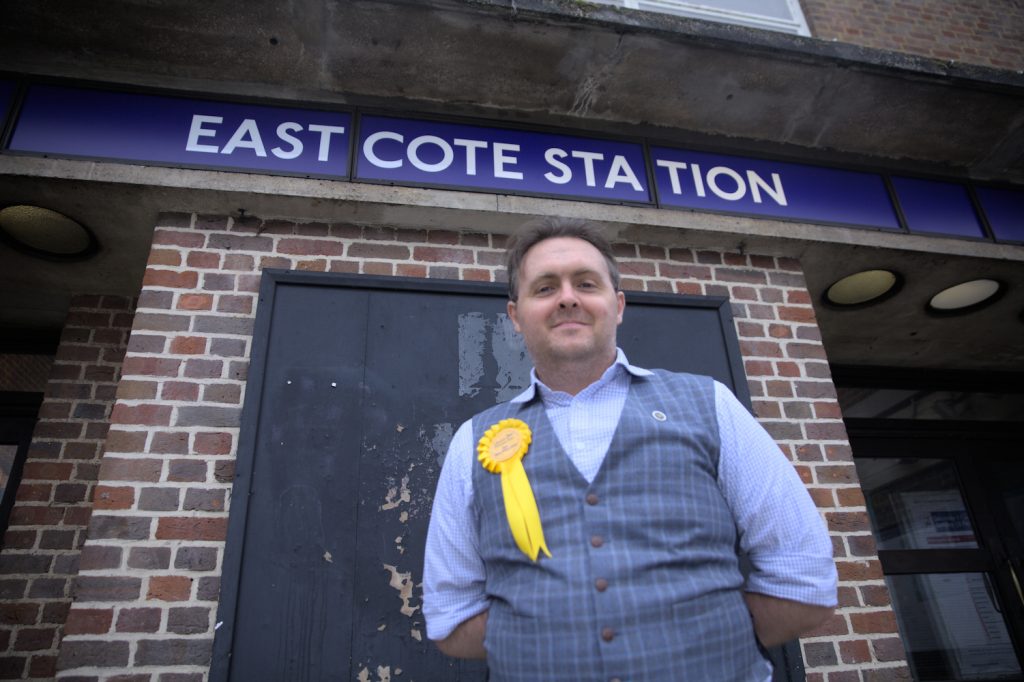
In case you’ve been living under a rock, the famously-absentee Member of Parliament for my neighbouring constituency of Uxbridge & South Ruislip resigned in what I can only describe as a fit of pique. He had been facing the judgement of the committee of privileges over his conduct surrounding Partygate, and the expectation at the moment is that the report – which was given to him in advance of his resignation – contained a recommendation to suspend him for long enough to trigger a recall petition. Regardless of his guilt or innocence, he’s now gone, so there is a by-election coming in Uxbridge & South Ruislip. Luckily we have a candidate who has been active in the area for a long time in Blaise Baquiche. Blaise is a hugely passionate candidate, and he and I have been working together on our campaigns for a while now. I have certainly been impressed by his dedication to fairness and integrity, and I wholeheartedly support his campaign to be an MP for Hillingdon. Blaise’s Beliefs Blaise with me and London Assembly member Hina Bokhari Blaise is a committed environmentalist. Importantly, he sees this as an opportunity for Britain to make use of our incredible natural resources in the form of solar, wind and tidal energy to become self-sufficient for energy generation, perhaps even a net exporter. This can only be a positive for the country given the problems we have seen recently with the international price of gas and the control that Russia has on a large proportion of our supply. Blaise, like me, also wants to see an end to the wholly unnecessary dumping of raw sewage into our country’s rivers and coastal waters. We have sufficient technology available to us already to make this sort of action unnecessary, but the government right now puts water company profits ahead of the environment, and that attitude must change if we want to leave the country habitable for our children. His environmental beliefs means that there are certain things he sees as necessary evils, for example the proposed expansion of the Ultra-Low Emissions Zone. However, like me, he feels that the support being offered to non-compliant drivers is not sufficient at this time, therefore he would oppose the ULEZ expansion in its current form. How Can You Help? If you’d like to lend a hand in Blaise’s campaign to be an MP, there are a few things you can do to help: We’re not in the restricted period for spending and donations yet (though check the date, as this is correct at the time of publication but will change when the date of the by-election is confirmed), so if you’d like to make a donation, now would be a great time. Our donation form is here. We’ll soon be limited on how much we can take, so fill your boots now and help us fight for Uxbridge & South Ruislip. Whatever you donate, we will spend on sending the major parties that allow the current system to propagate a message. We’re going to need volunteers FAST. If you can lend a hand by coming and helping Blaise spread the word, that would be great and we’d love to see you. Our volunteer page is here. It doesn’t matter where you are in the country or even the world – we can make use of remote volunteers just as easily as local ones. Tell friends and family who might also want to help out. They can donate, volunteer, or just put up posters around where they live. Blaise with me and one of our volunteers in Eastcote earlier this year. Above all, remember that this vote will require more ID than any other election we have had in Hillingdon before, so it is going to be worth checking with friends and family that they have arranged a form of valid ID or a postal vote in plenty of time. However you choose to help, Blaise and I are very grateful indeed, and we hope to see you on the campaign trail! Bonus Video Just as a bonus, here’s a video of Blaise explaining a bit more about his campaign and his motivations. It’s really powerful stuff! https://www.youtube.com/watch?v=7QArQG_tBmc&pp=ygUPYmxhaXNlIGJhcXVpY2hl
A Wasted Vote?
Is a vote for the Liberal Democrats a wasted vote? No, it’s a very positive step.
Petition – Don’t Take Away Freedom of Speech, Hillingdon Council
Our freedom of speech is at risk in Hillingdon. Sign a petition to tell Hillingdon Council that this isn’t okay.
Express Route to the Lowest Common Denominator
I spent four hours in a car yesterday, so was already in a pretty foul mood. When I reached my destination, I saw that my messages contained a really ugly article by the Express. This concerns a fellow Liberal Democrat candidate, Katy Sykes, and I have had the pleasure of being on a panel show with Katy in the last few months. At no point did I think the accusations sounded like her usual persona at all, so I thought I would go back to her to get the real story. The Offending Article To call this an article would, in my view, be overly generous. It isn’t. It’s a very biased hit piece. Noteably, the Express did not bother to ask Katy for her side of the story before going to print with this garbage, so naturally it was entirely one-sided. Don’t believe me, though, judge for yourself: In 2013 Ms Sykes said: “Aaaaaaaahhhhhhhhhhhhhhhhh, I really really want to kill something.” Two months later she posted: “You better fn have nine lives coz I fn have eight knives.” She also threatened: “One more person calls me a weirdo or filthy c*** then I think I’m going to rip their vocal cords out and use them to slice their knackers off.” Ms Sykes posted in May 2013: “I hate the fg northeast, why is it I seem to attract the fg b*d scum everywhere I go, feel like either hurting them or killing myself.” Frankly, it is brutal that the Express trawled through Katy’s old posts like this to find anything that could possibly be held against her. We have all said things we didn’t mean online, and the fact that Katy has not been in the news for “ripping out someone’s vocal cords and using them to slice their knackers off” would certainly imply to me that this was an example of someone venting, not making actual legitimate death threats. Transparent Faux Outrage In response to finding these comments, naturally the responsible thing to do as a serious journalist would be to message Katy asking for an interview to discuss the comments. Naturally that’s what the Express failed to do. In fact, they went straight to a Conservative MP, Simon Clarke, for his view. His statements were: Approached by the Express for a reaction, local Conservative MP Simon Clarke said the posts from Nikita Sykes are “horrifying”. He said: “These quotes are horrifying, most especially in their repeated references to, and threats of, extreme violence. “It is very obvious Ms Sykes is totally unsuitable for public office and I hope the Liberal Democrats will act immediately to withdraw her candidacy – she ought never to have been allowed to stand in the first place. “I hope she can now find the help she clearly needs.” Simon Clarke Clearly Mr Clarke is new to the internet if he thinks that comments like that are horrifying (if he needs an education, then a quick visit to Reddit introducing himself as a Conservative MP will likely show him what horrifying really is!). I personally wonder what sort of environment he has found himself cushioned in where freedom to vent on social media has been so badly curtailed, especially as he is in the party that boasts about freedom to cause offence with their bigoted views. More to the point, the idea that this is a threat at all is entirely unfounded. A threat is directed against a person or group of people, and arguably it must be perceived as potentially real. Venting online and talking about wanting to harm or even kill “someone” is not a threat, it is merely venting. Now, you could argue that the language was inappropriate, especially if the meaning was actually literal. But in order to do that, you would have to actually approach the person who uttered those words and expressed those views, and you would need to be satisfied that a) they were actually meant to be a credible threat (they weren’t) and b) that they represent current views (they don’t). In short, this isn’t journalism, it’s a thinly-veiled hit piece against a candidate who made a number of statements a decade ago that she now doesn’t identify with. For fairness, I must mention that the article states that Katy was contacted for comment, but she tells a different story and says that the paper never actually made any effort to get in touch with her. To my mind, I am more inclined to believe Katy here, as most of us candidates have numerous ways for people to get in touch with us, and it is very unlikely that we would miss an opportunity to speak to the press. Conclusion This article really irritated me for a number of reasons: It’s easy to find out what views a candidate has these days. As an example, if anyone wants to find out what I advocate, they can look at my manifesto. They certainly don’t need to go back through my social media history looking for moments which don’t necessarily still represent my views today. By our nature we are a changing species, and as James O’Brien states “there’s no point in having a mind if you never change it.” The Express should be ashamed of themselves. This article isn’t journalism, it’s a pathetic hit piece that tries to take advantage of someone’s poor mental state from a decade ago as an attack on them now. Simon Clarke should be ashamed of himself. He took this opportunity to pass judgement on someone now based on a series of venting posts made during a period of mental fragility a decade ago. Rather than doing the right thing and reprimanding the “journalist”, he took the opportunity to attack someone for daring to have been vulnerable in the past. Anyone who reads the Express should consider buying another paper. If this is the quality of their journalism, then their paper is fit only to be used if you run
Scandals
A brief look at some of the recent scandals of the Conservative government.
A Musing on Proportional Representation
How might proportional representation be implemented if we make a change? Does it need to be complicated?
Campaign Launch
I am officially launching my campaign! Support me if you also like democracy, equality and integrity in your elected officials.
Tax Evasion by MPs
I’m going to say something that might be deemed controversial by some (though hopefully not many) – MPs shouldn’t commit tax evasion! I know, I know, a radical suggestion that those elected to represent the country should be happy to pay the country what they owe in taxes. The news this week that Nadhim Zahawi, current Chair of the Conservative Party and former Chancellor of the Exchequer, has agreed to pay up an amount that he (may have) evaded summing to around £3 million is frankly outrageous. So how should we respond to alleged tax evasion by MPs? In my view, this is yet another area that needs significant reform. It’s lower down my priority list than some other matters, but this seems like an easy thing to fix, so perhaps it will end up being higher on the agenda. What Happened? This story has really blown up in the last month, but it has been brewing for a long time. In essence, Nadhim Zahawi set up YouGov, and information-gathering firm. So far so good. Where it goes wrong is that he deliberately created this in an offshore vehicle, owned in large part by his parents. While the exact technicalities of this are beyond me and well into the realm of tax professional, the exact structuring has been analysed by Dan Neidle at Tax Policy Associates for several months. Worth a read here. Dan and I definitely don’t see eye to eye on all matters of tax, but on this we are without question united in our rage. Dan Niedle of Tax Policy Associates, probably Nadhim Zahawi’s worst nightmare at the moment. Importantly, that’s not where this ends. Zahawi clearly didn’t like this analysis, so he challenged it. Not just by disagreeing with the analysis, but by instructing solicitors Osborne Clarke to essentially threaten legal action against Dan Niedle. Dan being a former partner at a very successful London law firm was not the ideal target for such a threat, and he responded wonderfully. Again, the whole saga is worth a read, but the long and short of it is that Osborne Clarke ended up not pursuing a claim against Dan, and were in turn reported to the Solicitors Regulation Authority for abuse of the legal system. End Result So how does this saga end? We have someone allegedly evading taxes of £3 million and only coughing up after months of analysis and questions from a very well-qualified outsider. His agreement to repay the taxes shows clearly that this amount should have been paid in the first place, and as such this looks like evasion rather than avoidance – the latter being legal use of things like ISAs and pensions, which HMRC would have no claim over. Given this is – apparently – tax evasion by a former Chancellor of the Exchequer and the current Chairman of the Conservative Party, what should we expect to happen? My prediction is “nothing at all”. The Conservative Party has displayed very little interest in punishing tax evaders of a certain level of wealth. It seems that once you get above a certain level of wealth, you get carte blanche to behave however you like, with barely even a slap on the wrist if you get caught. In this case, paying back the tax that should have been paid in the first place is nowhere near enough. This is a man who served as the Chancellor and before that called for the tightening of tax loopholes under the former Labour government. He clearly knew exactly what he was doing and chose to deny millions of owed tax to the UK regardless. Whether you support conservative principles or not, this sort of behaviour should not go unpunished. Zahawi should have to pay back considerably more than the tax he underpaid, and should right now be facing criminal charges to analyse whether his behaviour was egregious enough to warrant jail time. At the very least, he should no longer be allowed to serve as an MP.
♫ All I Want For Christmas Is… Fairer Representation in Parliament ♫
I’m not sure this will catch on as a Christmas song, but it certainly gives me a good opportunity to talk about my favourite subject – electoral reform! Given the festive season, perhaps I can talk about Proportional Representation in a slightly different way than usual. I have talked about proportional representation before in an article about cake and also on an episode of Family Politics. Who’s In Charge? Santa’s Elves, or at least a close approximation It goes without saying that Santa is the one in charge of his workshop. Of course, Mrs Claus is in charge of Santa, but for the purposes of this analogy let’s just consider Santa. This is effectively a hierarchy. What Santa says, goes. The elves have little say in how the workshop is run, despite making up the clear majority of the people present. Where the leader in question is a benevolent and competent individual, this system can work. Unfortunately, here in the UK, we have no such guarantees. Our leaders have proved time and time again that they are neither benevolent nor competent. So how might proportional representation fix this issue? Power Should Reflect Support As a basic principle, it is pretty clear that power should be based on support. Is that what happens now? The answer is no, as shown by the fact that the 2019 General Election resulted in the Conservatives getting 43.6% of the votes, 56.2% of the MPs and, as a consequence of getting majority control of the House of Commons, 100% of the legislative power. What does this mean? It means that with a minority of votes, our government got all of the power. Smaller parties, including the main opposition, have no real power other than to question the government. This means that: Party Vote Share Power Share Conservatives 43.6% 100% Labour 32.1% 0% Liberal Democrats 11.6% 0% Scottish National Party 3.9% 0% Green Party of England and Wales 2.6% 0% Others 6.2% 0% Source: Wikipedia You can see from the table above that the Conservatives are only in a majority position now by essentially stealing the votes that were cast for smaller parties, most notably the Liberal Democrats and the Greens. This is a consequence of our First-Past-The-Post system for elections, and this distortion is why the Conservatives fight so hard against electoral reform. If you look at this and think it’s fair, then I don’t know how to persuade you otherwise except to get you to think of how you would view it if your chosen party wasn’t a beneficiary of this system. Our current system is designed to give majority control to minority parties. Almost all other votes as discounted. This has the perceived advantage of allowing fast lawmaking, but that speed comes from a system which discourages co-operation for the good of the country. Indeed, the traditions and customs of the Houses of Parliament start with the assumption that there will be a government and an opposition rather than a collaboration. Incidentally, do you know how the distance between the front benches in the Commons was decided? It is two extended sword lengths, stemming from a time when crossed swords were actually a possibility if the benches weren’t sufficiently separated! Swordsmen getting ready for a fight An Alternative How might we fix this problem? A simple solution is just to assign seats according to votes. That would mean that the 2019 election would have resulted in the following: Party Vote Share Number of Seats Actual Number of Seats Conservatives 43.6% 283 365 Labour 32.1% 209 202 Liberal Democrats 11.6% 75 11 Scottish National Party 3.9% 25 48 Green Party of England and Wales 2.6% 17 1 Others 6.2% 40 22 Source: Wikipedia (and my own calculations) In addition to this is the Speaker, who is an MP but does not participate in votes or elections for the most part, which means that his constituency is effectively unrepresented as well. This takes the total to 650. If the system was adjusted to make seats match votes better, we would have 64 more Liberal Democrats in the House of Commons, and would be a very significant force that would need to be negotiated with and considered for all major decisions. On their own, the Conservatives would not have the power to implement any legislation, so this persuasion would be absolutely essential for introducing any new laws at all. This would give power to smaller parties in the form of influence to pass legislation for the price of support for their own initiatives at a later stage. Under Proportional Representation we would see much better representation of a multitude of views and backgrounds within government debates, and views would actually need to be understood and accommodated before laws could be passed. I can only see this as a positive. Close Representation Actual enquiry from a potential constituent One argument against a change is the break in ties between constituency and their MP. I would counter this by asking whether anyone considering supporting me feels well represented now. The current MP, David Simmonds, is a Conservative politician. I have already been approached by potential constituents that wanted to talk to me in preference to him because they felt that he did not represent their interests. As such, local representation is something of an illusion. How might it work with a more proportional system? Let’s take the Liberal Democrats as an example. If we had won 75 seats in the General Election, we could assign each MP to, say, 8 or 9 constituencies. Assuming a constituency size of 70,000 and a vote share of 11.6%, this equates to 64,960 to 73,080 constituents who likely votes for Liberal Democrats. In other words, the number of people in their patch who voted for them is broadly equivalent to the current constituency size (deliberately so). What this means for the Ruislip, Northwood and Pinner constituency is that we would likely share a Conservative MP with one other constituency, so Conservative
Labour Party Problems
Our current system is broken, in that it is essentially designed to make votes a choice between two major parties in charge of the country. In fact, this goes so far as to name the leader of the Labour party “the leader of the Opposition” – the assumption is that the Government and the Opposition are basically going to swap control of the country periodically, with no real prospect of third parties ever getting into power. In my mind, this system needs a major reform, but in the interim many people might say that the Labour party is better than the Conservatives. In one sense I agree, in another I wholly disagree. In this article I will talk about some of the problems with the Labour Party (ignoring the claims of antisemitism and focusing solely on their policies). Brexit It is pretty clear at this point that Brexit was a mistake. We have not gained any economic benefit, nor are we expected to for decades, if at all. We have not gained any sovereignty that we didn’t already have. We have not freed up £350m a week for the NHS. In short, all the benefits of Brexit were lies touted by the likes of Boris Johnson and Jacob Rees-Mogg. Our missing EU Star It is vital to improve our relationship with the EU to secure our economic future and allow us to have influence over one of the largest political blocs in the world. In likelihood, this means undoing the disaster that was the 2016 referendum, whether that needs another referendum or not. I believe it is also necessary to hold the originator of these lies to account, as a lie to influence a referendum is tantamount to election-tampering. I strongly argue that the insistence on making Brexit work is one of the major Labour Party problems, as it is a wholly unachievable goal based largely on the wishful thinking of the rabid fringes of the Tory party and backed up by lies. Electoral Reform A ballot box As I have previously written, a vote for Labour while they do not support a change to Proportional Representation is a deferred vote for the Conservatives. Changing the way that votes are run to a more proportional system will almost guarantee that no party ever gets to form a majority government again, and unfortunately Labour’s leadership have shown themselves unwilling to take this step. For this reason, I do not believe that they are working in the interests of the country, but instead are focusing on short-term gains for individuals at the top of the party. In short, a major change to the way that elections are run is vital if we want to ensure that the Conservatives never get to do what they have done to the country again. Voter ID Coupled with the refusal to get behind electoral reform, Labour has aided the Tories in restricting the access to votes that we mostly take for granted by abstaining in the Lords on the fatal motion introduced by the Liberal Democrats to forestall the introduction of ID requirements that will likely restrict minority groups disproportionately. Ultimately it was extremely disappointing to see Labour peers refusing to do the right thing here. A UK Driving Licence, which will be accepted as ID if the current Bill goes into law. Elected Second House The Houses of Parliament I believe Kier Starmer is right to state that abolishing the House of Lords as it currently stands is a good idea, but replacing it with an elected second chamber seems pointless, as we already have one elected chamber which should represent the whole of the UK. Instead, I believe it is vital to change the mandate of the second house to one of an advisory role filled with genuine experts in their field and tasked with reviewing the actions of the main House and publishing their findings. Having two Houses with separate roles makes sense. Having two that are essentially elected in the same way seems pointless. If you are interested in my views on the aristocracy as a whole, I have written a piece on that. Strikes Sadly strikes have become a necessity for many workers to negotiate even reasonable terms. Nurses, for example. Labour have said many of the right things, but their insistence that their politicians do not join the picket lines is appalling. The Labour party should be completely on the side of workers, and while this may be a political game to win more votes from the Tories, it is purely a consequence of our broken electoral system, which the Labour leadership also oppose reforming. Summary I think the most powerful point I can make here is that a vote for the Labour Party and all their problems is merely deferring the time until the Conservatives get into power again. I see a lot of #GTTO hashtags these days, but if the goal is to get them out for good, a vote for Labour now won’t do it. Instead I would argue that the Liberal Democrats make the most persuasive case, in that we are open to the same fairness that Labour espouse, but we accept that the system needs to be changed to make the UK a better, fairer and more welcoming place.