Universal Basic Income
How could we pay for a meaningful Universal Basic Income?
Challenge Accepted!
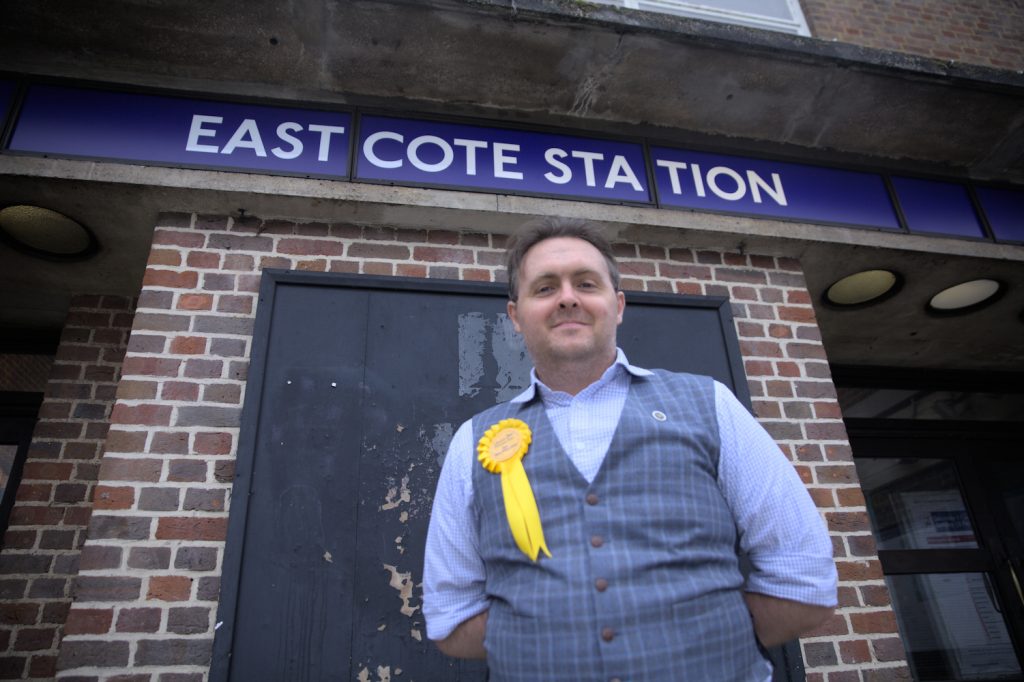
I was campaigning yesterday and when we were done, we retreated to a local pub to unwind, debrief and, of course, discuss politics. As part of this I approached the barkeeper, who indicated that I have almost no chance of getting elected in the constituency because “there are too many rich people” and “you need to come back when the Lib Dems have some actual ideas”. OK, I thought, I can do that. So here’s a list of five major policy ideas that the Lib Dems have (note that these are not necessarily exactly in line with my personal manifesto, which is open and transparent already, but represents the motions that the party has agreed at Federal level). 1. Electoral Reform The Lib Dems support democracy, in that we believe that all voices need representation at government level, not just the least unpopular party in a constituency. In practice, this means that it is necessary to introduce proportional representation so that everyone’s vote matters and safe seats are a thing of the past. This has a knock-on effect that political parties will need to get much better at co-operation, negotiation and long-term views, as coalition governments will become the norm rather than an exception. 2. Healthcare Lib Dems believe that everyone in the UK has a right to good quality healthcare free at the point of service and funded by taxes paid by everyone (see below). This includes ambulance services, which are currently atrocious, and social care, which has the potential to take all assets carefully acquired over an entire life of work and taxes. 3. Education Lib Dems believe that everyone deserves a quality education, and that as a society we are better off educating as many people as far as possible. As such, the party centrally support the abolition of university tuition fees, increases to the funding of schools in general, and the creation of an educational fund which encourages people beyond normal university age to take up some form of education to improve their overall knowledge base. 4. Immigration Without question, the Tories have doubled-down on the idea that immigration is a crime rather than a cry for help. The Lib Dems believe that the UK isn’t doing anywhere near enough to help asylum seekers, and on to of that the plan to ship migrants to Rwanda is frankly disgusting and economically prohibitive. Instead the Lib Dems believe that immigration is generally a positive for the country, in that immigrants often do jobs that those in the UK do not want to do, e.g. fruit-picking, cleaning, etc. Frankly these individuals should be welcomed, not demonised. 5. Taxes We Lib Dems acknowledge that the current tax system is designed to be unfair. Capital – or wealth – is taxed at a much lower rate than income, meaning we effectively reward those who already have their fortunes while penalising those who work to build a similar fortune. The idea of a progressive tax system is to ensure that those with the broadest shoulders carry the largest load, but our progressive system utterly falls apart for the highest levels of wealth, where often almost no tax is paid at all on the largest of estates in the form of either capital gains tax or inheritance tax. As a first step to redressing this, the Lib Dems believe that harmonising capital gains tax with income tax is an improvement in fairness and will capture more wealth, taking some of the burden off income-earners. As an aside, I believe this doesn’t go far enough, and I would like to see further harmonisation with inheritance tax, the abolition of most allowances and tiers, and the introduction of the universal basic income to provide the progressiveness. Bonus: Housing Conservatives have failed miserably when it comes to house building and infrastructure required to support that. Part of the increased tax take from the ultra-wealthy above could easily be used to build more housing, which in turn would take a lot of pressure off the immigration system. As part of this, we would need to acquire some of the 30-50% of the UK currently owned by landed gentry, but this seems less of a problem if said estates are required to actually pay tax like normal individuals. Summary This wasn’t really much of a challenge. Frankly, the Lib Dems have a huge number of policies, and it is only by listening to the Conservatives or their client media that you could ever think that this wasn’t the case. In fact, looking at the last General Election, it is quite possible that the Conservatives had the fewest ideas with the least amount of actual analysis, resulting in a very short wishlist of ideas that had no analytical backing whatsoever (oddly reminiscent of the “true Tory Budget” announced by Kwasi Kwarteng as Chancellor which had to be almost wholly walked-back by Jeremy Hunt). I imagine there are criticisms that could legitimately be levied against the Lib Dems, but lack of ideas is definitely not one of them. So yes, next time you feel like announcing that the Lib Dems don’t have ideas, think again. We do. Lots of them.
Requesting OBR Forecasts – Part 3
This attempt to actually get the Government to share its analysis of the projected impact of Kwasi Kwarteng’s mini-Budget in ongoing. Today I had a response to my request for an internal review, which was as follows: I think it is fairly clear from this that the Treasury is desperate not to share this information with the public. As I already argued to them, the OBR forecasts for Kwarteng’s statement represent statistical information which should have been used to make informed policy decisions. The fact that the projections were only requested after the date of the Statement does not change the fact that the policy in question was, at that time, finalised and announced, meaning s35(1)(a) cannot possibly apply. I have referred this matter to the Information Commissioner’s Office for their view on the matter, and I will continue to post updates as and when I receive them. Story so far: Part 1Part 2
Episode 3 – Dad and Electoral Reform

A slightly delayed episode of Family Politics in which I chat to my dad about electoral reform – what is it, why is it needed, and how does it relate to cake?
Is the UK a Failed State?
Not exactly a pleasant though, but has the UK failed as a whole? Wikipedia lists the following as general categorisations for a failed state: Of these, I would argue that the only one we have not satisfied is the first, in that we have not (yet) lost control of any territory nor have we (yet) lost any of our ability to call upon the armed forces. Looking at the other categories though: Erosion of legitimate authority to make collective decisions Without question, the current government has almost done its best to delegitimise their authority. After all, we are on the third Prime Minister in the span of a few short months, and I have lost track of the number of scandals that have caused ministers to resign or be sacked. It is genuinely hard to accept that the current government has any mandate to lead, and in addition to this they have demonstrated time and time again that they do not have the collective character to do so. Inability to provide public services Sewage is being dumped into our waterways without treatment, doctors and nurses have threatened strike action for the first time ever, utilities have spiked in price, transport workers have repeatedly had to strike, several councils have had their refuse collections go on strike, education authorities have been brought to their knees with continuous budget cuts. Inability to interact with other states as a full member of the international community Brexit. Need I say more. We chose as a country to fulfil this particular requirement, and we can blame the Conservatives for blindly following a narrow advisory referendum into economy and diplomatic disaster. Conclusion The more I think of it, the more I think that we are presently a failed state. Our leaders do not have a mandate to be in charge, they do not have the confidence of their electorate to do the right thing, and the continuous changes in leadership show that they do not even have confidence in themselves. Hopefully this government is in its dying throes and we will not see significant additional harm before we can kick them out as voters.
My Personal Manifesto
My views are still changing, but I believe some of my positions are worth setting out below, with an invitation to anyone to get in touch with me to discuss my views. Please note, some of my personal views do not align directly with Liberal Democrat positions on some issues. As a party, we are constantly debating ideas to add to the party manifesto, and as a result the positions below are ones that either I would already vote for in line with existing Liberal Democrat policy or I would put my policy proposals to the Party as a whole in an attempt to persuade them of my views. My voting record in future will be drawn from my personal manifesto, the manifesto of the Liberal Democrat party, and above all my constituents. Electoral Reform Brexit Land and Property Tax Reform Pensions Trusts Education & Healthcare Utilities Transport